Tuesday, 7 June 2011

The E.coli Cure: More E.coli.

Baltic Dry Index. 1484 -05.


LIR Gold Target by 2019: $30,000. Revised due to QE programs.

"Of all the contrivances for cheating the laboring classes of mankind, none has been more effective than that which deludes them with paper money."


Daniel Webster


In Europe, Club Med and Ireland have gone bust, or in Ireland’s case, its banks have and the Irish government has foolishly committed Ireland’s serfs to repay the bank creditors out of their savings and generations of future earnings. Enter the Doctors from the ECB and IMF. Europe’s Club Med plus Ireland have gone down with a near fatal case of financial E.coli, living far beyond their means, running up unrepayable debt on the German credit card, and bribing the voters by putting far too many of them in make work jobs on the public payroll. So what do the good doctors propose as the solution, more E.coli debt and blood letting the patient. The blood is to be transferred to Europe’s fat cat banksters who’ve come down with a bad case of insane lending and derivatives gambling Mad Cow disease. The patients were all unknowingly infected many years ago, when a frightened Republican President, took the fatal poison of a fiat currency dollar reserve standard. America joined Europe and the USSR and China, in operating an unsound monetary system that has always failed in an orgy of gambling and debt, and collapse and social disorder. In fairness, Europe thought it was tied in to the dollar which was supposedly liked to gold, until one day it suddenly wasn’t. Once on USSR style fiat currency, a similar fate is only a matter of time until the system implodes under a tsunami of mis and malinvestment. Before then, an escalating war between the relatively few haves and the masses f have nots, occurs, as the haves try to stop the have nots from threatening their privilege. Banksterism yes, capitalism it’s not.


For the moment, we all await the “next Lehman” and the collapse of the fiat system. Stay long physical precious metals since that collapse gets closer by the day.


"Deficit spending is simply a scheme for the 'hidden' confiscation of wealth. Gold stands in the way of this insidious process. It stands as a protector of property rights."


Alan Greenspan


Dubious Value


European Banks Dump Junk Bonds on ECB


By Matthias Brendel and Christoph Pauly 06/06/2011


European bankers from countries with ailing economies need fresh infusions of cash from the European Central Bank, but the ECB has turned into the dumping ground for European banks' junk bonds. The practice could harm the central bank's reputation as well as the euro.


One item on the list of eligible securities of the European Central Bank (ECB) is a Portuguese bond from the year 1943. It will be roughly 8,000 years before this money is due for repayment on Dec. 31, 9999.


But this bizarre bond is now extremely valuable for a Portuguese bank, because the document can be submitted to the ECB as collateral in return for a fresh loan in euros. Since the international capital markets are practically closed to banks from Portugal, Greece and the other ailing economies in the euro zone, the financial institutions in these countries desperately need such cash injections from the ECB.


Many of the submitted securities are not really secure -- and it is difficult to say what they are actually worth. As a result, the ECB is slowly degenerating from the guardian of the euro to the bad bank of the euro system, where Europe's banks can dump their junk bonds.


SPIEGEL reported in May that the ECB and, especially, its member national central banks don't scrupulously examine the securities submitted by European banks. This has resulted in junk bonds worth hundreds of billions of euros on their balance sheets.


"These errors were reviewed and corrected," Irish Central Bank Governor Patrick Honohan told the Reuters news agency in response to the report. The reaction of the ECB was also strangely muted. What else can it do? It can't deny the risks. If banks go bankrupt and their collateral isn't sufficient to cover their debts, the central banks will have to cover the losses. And if the central banks' reserves are lacking, then taxpayers will have to pick up the tab.


The dimensions are huge: The ECB has accepted some €480 billion ($700 billion) in so-called asset-backed securities (ABS), and it has an additional €360 billion in "non-marketable financial instruments" on its books.


To make matters worse, the bank has given tens of billions of euros to Portugal, Spain, Greece and Ireland in return for government bonds of dubious value. Although these are only valued at significantly reduced market prices and have been discounted in accordance with their ratings, the central banks often turn a blind eye to this fact.


"It's not our job to constantly bail out insolvent banks in insolvent countries," says a concerned banker at Germany's central bank, the Bundesbank. He says this jeopardizes the reputation of the ECB and, ultimately, the euro.


----Another widely ignored risk at the ECB is the bank's enormous number of non-marketable assets, which the central bank in Frankfurt holds as collateral from other banks. These are promissory notes and other loans that are not traded on any stock exchange.


If the institution that submitted such a security goes bankrupt, the ECB will have to cash it in. If things go wrong, it would end up being stuck with this supposed collateral, for example, a loan for a wind farm or a holiday resort.


More.


Up next, the reality of modern banksterism. In reality, why the next Lehman collapses the Ponzi scheme of the fiat reserve standard. Sadly we are all Greeks now. One way or another, fiat currency has corrupted trade, and turned banking into banksterism. Corruption is now the rule not the exception. How Mammon morphed into God in the Land of the Squids.


"Borrowers will default. Markets will collapse. Gold (the ultimate form of safe money) will skyrocket."


Michael Belkin


Will Greece Let EU Central Bankers Destroy Democracy?


A World at Financial War


By MICHAEL HUDSON 6/6/2011


When Greece exchanged its drachma for the euro in 2000, most voters were all for joining the Eurozone. Their hope was that it would ensure stability, and that this would promote rising wages and living standards. Few saw that the stumbling point was tax policy. Greece was excluded from the eurozone the previous year as a result of failing to meet the 1992 Maastricht criteria for EU membership, limiting budget deficits to 3 percent of GDP, and government debt to 60 percent.


The euro also had other serious fiscal and monetary problems at the outset. There is little thought of wealthier EU economies helping bring less productive ones up to par, e.g. as the United States does with its depressed areas (as in the rescue of the auto industry in 2010) or when the federal government does declares a state of emergency for floods, tornados or other disruptions. As with the United States and indeed nearly all countries, EU “aid” is largely self-serving – a combination of export promotion and bailouts for debtor economies to pay banks in Europe’s main creditor nations: Germany, France and the Netherlands. The EU charter banned the European Central Bank (ECB) from financing government deficits, and prevents (indeed, “saves”) members from having to pay for the “fiscal irresponsibility” of countries running budget deficits. This “hard” tax policy was the price that lower-income countries had to sign onto when they joined the European Union.


Also unlike the United States (or almost any nation), Europe’s parliament was merely ceremonial. It had no power to set and administer EU-wide taxes. Politically, the continent remains a loose federation. Every member is expected to pay its own way. The central bank does not monetize deficits, and there is minimal federal sharing with member states. Public spending deficits – even for capital investment in infrastructure – must be financed by running into debt, at rising interest rates as countries running deficits become more risky.


More.


Michael Hudson is a former Wall Street economist. A Distinguished Research Professor at University of Missouri, Kansas City (UMKC), he is the author of many books, including Super Imperialism: The Economic Strategy of American Empire (new ed., Pluto Press, 2002) and Trade, Development and Foreign Debt: A History of Theories of Polarization v. Convergence in the World Economy. He can be reached via his website, mh@michael-hudson.com


"The international monetary order is more precarious by far today than it was in 1929. Then, gold was international money, incorruptible, unmanageable, and unchangeable. Today, the U.S. dollar serves as the international medium of exchange, managed by Washington politicians and Federal Reserve officials, manipulated from day to day, and serving political goals and ambitions. This difference alone sounds the alarm to all perceptive observers."


Hans F. Sennholz


At the Comex silver depositories Monday, final figures were: Registered 28.77 Moz, Eligible 71.76 Moz, Total 100.53 Moz. Deliverable silver is now only about 29% of Comex stocks. My guess is that inventories are signaling a default lies ahead.


+++++


Crooks and Scoundrels Corner.


The bent, the seriously bent, and the totally doubled over.


No bent pols or Wall Street vampire squids today, not even the feeders and enablers of the Madoff caper, today Der Spiegel on what went wrong in Germany as the E.coli outbreak first got blamed on those dodgy Spanish cucumbers, and then on dodgy German grown beansprouts. As of this morning, no one has much idea on how a new virulent strain of E.coli got into the German human food chain, nor when it will end, nor when another outbreak might occur. About the best advice for avoiding contracting it, don’t bother visiting Hamburg this year. Below, Germanic super efficiency 19th century style. Time to bring in the Swiss?


Precious Time Lost in Hunt for E. Coli


06/06/2011


The E. coli epidemic continues to ravage Germany, with every attempt to pinpoint its origin ending in failure so far. Experts say that for a developed country, Germany was ill-prepared to handle such an outbreak and that officials wasted valuable time.


Teams of scientists and investigators are desperately hunting for the cause of Germany's deadly E. coli outbreak as doctors struggle to treat a growing number of patients. But as the deadliest ever recorded outbreak of E. coli continues to spread in Germany and to other countries, one thing has become clear -- health authorities were not fully prepared. Experts say the country's alert system is rudimentary compared to those in other developed nations.


The pursuit of the dangerous pathogen's origin began on May 19 after findings from the University Medical Center Hamburg-Eppendorf (UKE) set off an E. coli alert at the country's disease control center, the Robert Koch Institute (RKI). The next morning four RKI officials traveled from Berlin to Hamburg to question patients who were still conscious about what they had eaten, and where. What followed seemed like an incredible success. Many patients said they had eaten raw tomatoes, cucumbers and lettuce, and when Spanish cucumbers sold in Hamburg's central wholesale market tested positive for E. coli, health officials there proclaimed on May 26 that they had found at least one source of the outbreak. But the relief lasted just five days. Further tests revealed the bacteria was not the same serotype as the one isolated in patients.


Back where they started from, researchers then discovered that they were dealing with a very rare strain of the bacteria Enterohemmorhagic Escherichia coli (EHEC), never before seen by scientists in an outbreak before. The mutant strain of two separate E. coli bacteria was particularly aggressive, the World Health Organization said.


On Monday, hospitals all over northern Germany struggled to treat thousands of patients suffering from the effects of the bacteria. More than one-third of the people infected with E. coli have also come down with a life-threatening complication known as hemolytic-uremic syndrome (HUS) which attacks the blood, kidneys and brain, and has left doctors racing to save lives. Ambulances have reportedly raced between cities to get desperately needed dialysis treatments for victims' failing kidneys as demand for machines became unmanageable. Meanwhile, clinics have cancelled routine operations in order to focus on emergency rooms filled with people infected by the bacteria, which causes watery or bloody diarrhea.


----Evidence does, however, indicate the outbreak is somehow linked to Hamburg's large wholesale produce market -- the same place where the contaminated Spanish cucumbers were found -- though officials remain uncertain whether the contamination occurred on the farm or during shipping, storage or packaging. "In recent days we've had long conference calls with other agencies and have determined that clues repeatedly point to Hamburg's wholesale market," an unnamed Bremen health ministry official told SPIEGEL. "It seems to play some kind of role or another."


Vendors at the huge market hall, which is as large as 30 football fields, have suffered immensely from a general fear of raw produce arising from the RKI's daily renewal of its recommendation for consumers to avoid tomatoes, cucumbers and lettuce. Meanwhile, the initial warning about Spanish cucumbers has sparked diplomatic tensions with Spain, which is now demanding compensation for lost sales.


----But therein lies the fatal mistake of the German health authorities. Eighteen valuable days were lost between when the first patient came down with diarrhea around May 1, and when the RKI was finally alerted.


While part of this may be because those infected waited until their cases became severe to see a doctor, the delay also indicates how unprepared German doctors were to properly report and handle the outbreak. Many fail to consider the possibility of an E. coli infection at all, sending patients with diarrhea home with a prescription and failing to take stool samples. But the larger problem is that local German health authorities are given abundant time to relay news of E. coli infections in their area. Infections, evidence of E. coli sources and even resulting deaths must be reported to state authorities just once a week, at the latest on the third working day of the week following initial identification. State authorities then have another entire week before they must inform the RKI.


----While news of a potentially deadly outbreak can take up to two weeks to reach top German health authorities, other developed nations such as the United States and Japan, have instituted early warning mechanisms. A swift reaction is crucial in such situations, said Robert Tauxe, deputy director of the Division of Foodborne, Bacterial and Mycotic Diseases for the Centers for Disease Control and Prevention in the US. In 1993, officials there responded to an unprecedented E. coli outbreak by creating a registry system for every suspicious group of gastro-intestinal infections. Since 2001, every state and some large cities have had laboratories that analyze stool samples from potential outbreaks and catalogue different strains of the bacteria. The CDC checks it daily, Tauxe said, saying a similar system should already be in place not just for Germany, but all of Europe.


More


"Whenever an overall breakdown of a monetary or financial system occurs, return to gold always restores order, revives confidence and brings back prosperity."


Donald Hoppe


The monthly Coppock Indicators finished May:


DJIA: +196 Up. NASDAQ: +249 Up. SP500: +200 Up.


The Dow and SP 500 and NASDAQ have all reversed from down to up. The Fed’s rigging of the indicators seems to have worked. Note: like all indicators, they were devised for normal markets not markets where the central bank is flooding the economy with new cash. In current conditions where risk is suspended by too big to fail, I doubt any indicators are showing more that where the Fed’s new cash is flowing in our world of casino capitalism. But the Fed’s QE program is supposed to end this month!!!


Monday, 6 June 2011

06.06.1944.

Baltic Dry Index. 1489 unch

LIR Gold Target by 2019: $30,000. Revised due to QE programs.

Sixty seven years ago today, approximately 73,000 Americans, 61,000 British, and 22,000 Canadians, stormed ashore in Normandy and with great skill, bravery and God’s help, began the process of liberating Western Europe from Nazis tyranny. In a little less than a year, Hitler’s 1000 year Reich imploded, but not before unleashing the vengeance weapons against London and later Antwerp, and not before senselessly slaughtering millions more across Europe, and almost totally wrecking German civilization. Regrettably, Stalin’s Godless alter-ego Nazi like communist tyranny of the USSR, took over Eastern Europe and clung on until 1989. But the Europe we see today, is a product of those brave people’s sacrifice. Britain, Canada and America, could all to easily have cut a deal with Hitler’s Germany, since only Britain faced an existential threat, and left Europe to Nazis Germany and Hitler’s existential war with the USSR. Today we take a look at modern Europe.

My policies are based not on some economics theory, but on things I and millions like me were brought up with: an honest day’s work for an honest day’s pay; live within your means; put by a nest egg for a rainy day; pay your bills on time; support the police.

Margaret Thatcher.

In modern day Europe, Portugal’s turkey’s just voted for Christmas. I suspect that when Christmas arrives the turkey’s will be truculent over the result. Europe’s Great Austerity experiment rolls on. Multi decades of excess and deception are to be rolled back in three or 4 year programs, many of them overlapping, from the Atlantic to the Baltic to the Med. New debt is piled on already unrepayable sovereign debt of the Club Med nations. And all just to bailout Europe’s mostly insolvent banksters. I have my doubts that the ending will be like anything Europe’s elitists expect. “They pretend to pay us, we pretend to work”, is the least that comes to mind.

The trouble with socialism is that eventually you run out of other people’s money.

Margaret Thatcher.

JUNE 6, 2011

Portugal Decisively Ends Leftist Rule

Prime Minister-Elect Vows to Speed Privatizations, Extend Austerity Plans Beyond Terms of Bailout

LISBON—Portugal on Sunday voted decisively to end six years of leftist rule, electing the country's main conservative party and boosting prospects for austerity measures tied to a €78 billion ($114 billion) aid package from the European Union and the International Monetary Fund.

With most of the votes tallied, the center-right Social Democratic Party led by Pedro Passos Coelho had more than 38% of the votes, compared with 28% for incumbent Prime Minister José Sócrates of the Socialist Party.

As the result became evident, Mr. Sócrates admitted defeat and said he would resign as Socialist leader.

Mr. Sócrates led the country to early elections when he resigned in March after legislators from the opposition rejected his plan to cut Portugal's hefty budget deficit. As the government's funding costs surged and its cash reserves were depleted, he was forced to request an international bailout in April.

In selecting Mr. Passos Coelho, 46 years old, as the country's next prime minister, voters have chosen a politician and businessman who aims to close the gap in public accounts by fast-tracking privatization programs and extending the country's existing austerity plans beyond those outlined in Portugal's bailout program.

Mr. Passos Coelho has never held a government post, but he says his experience as an entrepreneur makes him a good fit as prime minister at a time when Portugal's government faces budget cuts and limited alternatives to foster growth.

He has vowed to downsize ministries and state agencies and create a government that is able to implement an ambitious privatization program and revise current infrastructure projects, such as the high-speed train.

More.

http://online.wsj.com/article/SB10001424052702303745304576366583992320502.html?mod=WSJEurope_hpp_LEFTTopStories

In the other part of the Iberian Peninsula, Spain’s new incoming local governments are finding the bank accounts bare or deep in debt. Socialism always ends badly, mired in debt. Below, the FT covers Madrid well on its way to becoming the next Lisbon.

No one would remember the Good Samaritan if he'd only had good intentions - he had money, too.

Margaret Thatcher.

Bankrupt’ claim heightens Spanish debt fears

By Victor Mallet in Madrid Published: June 5 2011 17:49 | Last updated: June 5 2011 17:49

The central Spanish region of Castilla-La Mancha is “totally bankrupt”, according to the incoming administration of the rightwing Popular party (PP), an accusation that will deepen concerns about Spain’s budget deficit.

The claim has prompted angry denials from the Socialist government.

Spain’s 17 autonomous regions and its more than 8,000 municipalities, with €150bn ($220bn) of accumulated debt between them, have become the latest worry for investors in Spain and its sovereign bonds.

Although the amount is less than a quarter of total public sector debt, regional debt has doubled since 2008. The 17 regions collectively exceeded official budget deficit limits in 2010, and appear likely to do so again this year despite repeated demands for compliance from the central government.

Catalonia, an economy the size of Portugal, says its deficit will be double the target.

Vicente Tirado, a senior PP politician in Castilla-La Mancha, said the region was “totally bankrupt”; owed suppliers such as pharmaceutical companies that provide drugs for hospitals a total of €2bn in unpaid bills; and would have trouble finding the money to pay the region’s 76,000 civil servants next month.

More

http://www.ft.com/cms/s/0/33ba454e-8f8f-11e0-954d-00144feab49a.html#axzz1OTRwMDWA

At the other end of the Med, the latest Greek tragedy just stumbles along, with no one seemingly able to bring it to its logical end. Inside or outside the euro, Greece needs to default, restructure its debt, and phase in austerity and a culture of paying taxes, and do it at a pace that brings the Greek public along. Instead a German imposed austerity, and French-ECB asset stripping straight jacket is being forced on Greece. Other than making Europe’s brain dead, insolvent banksters feel better, little good lies at the end of this one size fits all fiat European currency road.

JUNE 6, 2011

Plan Focuses on Rescheduling of Greek Debt

BRUSSELS—Support is building among senior European finance officials for a plan to press Greece's private-sector creditors into accepting a debt exchange that would result in delayed repayment to them, people familiar with the matter say.

But that aggressive course of action—which would probably trigger the euro zone's first-ever debt default—faces opposition from the European Central Bank, which would have to be a key player in the plan, and it will face tough battles at a series of meetings of politicians this month.

The latest plan was discussed at a meeting of euro-zone finance-ministry officials in Vienna last week, and senior euro-zone officials said Saturday that there was a tentative agreement to give Greece more financing—and that aid would likely come on condition that private-sector creditors bear some of the burden.

The Vienna meeting gathered the top civil servants in European finance ministries. They are central behind-the-scenes players, but it is their bosses and European leaders who will fight the political battles and make the final call.

The governments have concluded that Greece, propped up last year with a €110 billion ($161 billion) loan package, will need more cash as soon as next spring. The debt-exchange proposal, championed by Germany and with the strong support of several other euro-zone nations, would ease Greece's cash crunch—and also lessen the amount of extra money Germany and others must quickly put up, senior euro-zone officials say.

Under the plan proposed in Vienna, the 17 euro-zone governments would ask Greece's creditors to exchange their soon-to-mature debt for debt with a longer maturity, a process that could begin as early as July if finance ministers approve the new Greek aid package at their meeting June 20, officials said.

A German finance ministry paper, reported this weekend in German newspaper Die Welt and confirmed by a euro-zone official, proposes a seven-year extension on maturing debt.

More

http://online.wsj.com/article/SB10001424052702304474804576367563185441814.html?mod=WSJEUROPE_hpp_LEFTTopWhatNews

The big fat Greek sell-off

Required to contribute €50bn towards its own bail-out, Greece is finally facing up to the sale of its most treasured assets.

By Helia Ebrahimi, Senior City Correspondent 8:00AM BST 05 Jun 2011

Roll up, roll up, roll up. Elgin Marbles, Acropolis, Mykonos. Anyone? You don't have to be an ancient Greek historian to understand the significance of it. But maybe it helps. For Thucydides, born back in 460 BC, the Port of Piraeus was the commercial heart of the Athenian democracy. "From all the lands, everything enters," wrote the author of the History of the Peloponnesian War.

But now the port is up for sale – alongside the sort of assets even Thucydides would never have envisaged – in the biggest and most controversial privatisation Greece has ever seen.

Under pressure to raise €50bn as the quid pro quo for its massive €110bn (£98bn) bail-out, Greece is being forced to hawk its industrial and commercial backbone to the highest bidder.

On the block, alongside the Government's 74pc stake in Piraeus, is a similar-sized holding in the country's other main gateway port – Thessaloniki. Then there are the government's stakes in a host of public and private companies – as well as tracts of land. Corporate assets include OTE, the largest telecommunications company in the Balkans; PPC, the country's biggest electricity producer; horse-racing organisation ODIE; the state's 34pc stake in Europe's biggest betting company OPAP; another 34pc stake in Hellenic Postbank and train operator TrainOSE.

It is a gut-wrenching moment for a nation, whose heavily unionised workers are unlikely to be forced into accepting such privatisations without a fight.

-----That it has come to this goes right to the heart of the eurozone bail-out programme, highlighting the political tensions between the main provider of funds – Germany – and the weaker southern nations taking the money. That German companies are likely to wind up as the owners of many of the assets only adds to the controversy.

In addition to the €110bn of rescue aid already promised in last year's bail-out orchestrated by the International Monetary Fund, European Union officials reckon Greece will need around €30bn more in each of 2012 and 2013.

Privately angry that Greece has so far done too little after last year's bail-out to put its own debt-bloated house in order, officials from Germany's finance ministry last week pressed for the holders of Greek bonds to share some of the pain.

More

http://www.telegraph.co.uk/finance/financialcrisis/8556698/The-big-fat-Greek-sell-off.html

In Great Britain, in an attempt to recreate Dublin in London, but without the German and Brussels bureaucrats having to sign off on HMG’s policies, a weak coalition government is imposing shock therapy on an already weak economy. Time for “plan B” scream half Britain’s dismal scientists. Stick with “plan A” yell the others. For now a largely indifferent population hasn’t yet felt much of the effect of the Great Austerity, but that is just about to start to change. With its own fiat currency still largely under HMG’s control, a bout of competitive Sterling-EU devaluation seems set for the UK in H2 11. Stay long physical precious metals. Once again I suspect that end result will not turn out be what was expected or intended.

Unless we change our ways and our direction, our greatness as a nation will soon be a footnote in the history books, a distant memory of an offshore island, lost in the mists of time like Camelot, remembered kindly for its noble past.

Margaret Thatcher.

Economists urge ministers to stand firm on austerity programme as IMF verdict on Britain looms

The Chancellor faces a crucial test on Monday as the International Monetary Fund (IMF) gives its verdict on the British economy, amid a chorus of calls for the Government to adopt a "plan B" to safeguard fragile-looking growth.

By Emma Rowley 10:47PM BST 05 Jun 2011

The IMF judgment loomed as top economists leapt to the defence of the Coalition's austerity plans after some 50 academics signed a letter over the weekend calling for the urgent adoption of an alternative economic plan.

The supportive economists argued that abandoning the fiscal plan now would lead to even greater economic damage. Their intervention came after academics said that the "breakneck deficit-reduction plan, based largely on spending cuts, is self-defeating even on its own terms". The doubters voiced fears that attempts to shrink the hole in the budget will fail, as weaker growth as a result of the cuts will undermine the Government's tax revenues.

If the IMF, which last year backed the Coalition's "strong and credible" plan to shrink the budget deficit, follows suit, it will intensify calls for the George Osborne to change economic tack.

Britain's growth prospects have been repeatedly downgraded in recent months, by bodies including the Bank of England, the Organisation for Economic Co-operation and Development and the Government's own fiscal watchdog.

However, leading economists argued that the UK is still in growth mode and that the risks around reducing the fiscal consolidation efforts - including £81bn of cuts over four years - outweigh any benefits of changing tack.

"The damage that would be caused by abandoning the fiscal plan would be much bigger than any damage that might be caused by persevering with it," said David Kern, chief economist at the British Chambers of Commerce. Swerving off course would leave the UK's credibility "totally eroded", he feared, causing a fall in the pound.

Ruth Lea, economic adviser to the Arbuthnot Banking Group and a former Treasury economist, saw drawing up a plan B as "incredibly unwise". She said: "It's far too early to change course."

There is "no case" for cutting more slowly, said Douglas McWilliams, chief executive of the Centre for Economic and Business Research. Although he questioned the wisdom of raising VAT at a time of already climbing prices, he judged the overall scale of the fiscal tightening as "about right".

The letter which sparked the debate was signed by academics including Prof Sir Tony Atkinson of Oxford and organised by the centre-left pressure group Compass.

High-profile economists such as Jonathan Portes, director of the National Institute of Economic and Social Research, and Vicky Pryce, a former government adviser now at FTI Consulting, also questioned the Government's plans, although they were not signatories.

More

http://www.telegraph.co.uk/finance/economics/8558382/Economists-urge-ministers-to-stand-firm-on-austerity-programme-as-IMF-verdict-on-Britain-looms.html

I have also to announce to the House that during the night and the early hours of this morning the first of the series of landings in force upon the European Continent has taken place. In this case the liberating assault fell upon the coast of France. An immense armada of upwards of 4,000 ships, together with several thousand smaller craft, crossed the Channel. Massed airborne landings have been successfully effected behind the enemy lines, and landings on the beaches are proceeding at various points at the present time. The fire of the shore batteries has been largely quelled. The obstacles that were constructed in the sea have not proved so difficult as was apprehended. The Anglo-American Allies are sustained by about 11,000 firstline aircraft, which can be drawn upon as may be needed for the purposes of the battle. I cannot, of course, commit myself to any particular details. Reports are coming in in rapid succession. So far the Commanders who are engaged report that everything is proceeding according to plan. And what a plan! This vast operation is undoubtedly the most complicated and difficult that has ever taken place. It involves tides, wind, waves, visibility, both from the air and the sea standpoint, and the combined employment of land, air and sea forces in the highest degree of intimacy and in contact with conditions which could not and cannot be fully foreseen.

There are already hopes that actual tactical surprise has been attained, and we hope to furnish the enemy with a succession of surprises during the course of the fighting. The battle that has now begun will grow constantly in scale and in intensity for many weeks to come, and I shall not attempt to speculate upon its course. This I may say, however. Complete unity prevails throughout the Allied Armies. There is a brotherhood in arms between us and our friends of the United States. There is complete confidence in the supreme commander, General Eisenhower, and his lieutenants, and also in the commander of the Expeditionary Force, General Montgomery. The ardour and spirit of the troops, as I saw myself, embarking in these last few days was splendid to witness. Nothing that equipment, science or forethought could do has been neglected, and the whole process of opening this great new front will be pursued with the utmost resolution both by the commanders and by the United States and British Governments whom they serve…..

Winston Churchill. Speech to the Commons 06.06.1944.

http://www.winston-churchill-leadership.com/speech-d-day.html

At the Comex silver depositories Friday, final figures were: Registered 29.63 Moz, Eligible 71.48 Moz, Total 101.12 Moz.

+++++

Crooks and Scoundrels Corner.

The bent, the seriously bent, and the totally doubled over.

Today, three months on from the earthquake and tsunami which triggered the world’s worst nuclear accident since Chernobyl in 1985, the latest figures from the Fukushima number one reactor show it far from closed down, and in fact getting worse. Scientists track the ratio between the radioactive iodine isotope to radioactive cesium isotope, since with a 8 day half life for iodine vs 30 years for cesium, a shut down reactor will quickly see the proportion of iodine fall. Sadly and dangerously, Japan still seems to be covering up the true state of the reactors at Fukushima.

Tepco Slumps to Record Low on Radiation Spike

By Jason Clenfield and Norie Kuboyama - Jun 6, 2011 5:31 AM GMT+0100

Tokyo Electric Power Co. declined the most on record after reports that radiation surged at its Fukushima plant and the head of Japan’s largest stock exchange said the utility should be put in bankruptcy protection.

The owner of the crippled Fukushima Dai-Ichi nuclear plant plunged as much as 28 percent to 206 yen, the most since at least September 1974. The utility known as Tepco was the biggest decliner on the MSCI Asia Pacific Index.

Radiation readings inside the plant’s No. 1 reactor building rose to the highest level yet, almost three months after the disaster started, Kyodo News reported June 4, citing data from Tepco. In a separate report, the Asahi newspaper cited Tokyo Stock Exchange President Atsushi Saito as saying that the utility should undergo restructuring similar to Japan Airlines Co., which filed for bankruptcy protection in 2010.

----Tepco, which posted the biggest loss on record for a non- financial Japanese company, last week had its long-term credit rating cut to junk status by Standard & Poor’s Ratings Services. The utility may post a full-year net loss of about 570 billion yen on a parent basis, the Tokyo Shimbun reported today, citing an internal document from the company. Tepco said it wasn’t the source of the newspaper report.

http://www.bloomberg.com/news/2011-06-06/tepco-slumps-to-record-low-on-radiation-spike.html

Of course, our vision and our aims go far beyond the complex arguments of economics, but unless we get the economy right we shall deny our people the opportunity to share that vision and to see beyond the narrow horizons of economic necessity. Without a healthy economy we cannot have a healthy society. Without a healthy society the economy will not stay healthy for long.

Margaret Thatcher.

The monthly Coppock Indicators finished May:

DJIA: +196 Up. NASDAQ: +249 Up. SP500: +200 Up.

The Dow and SP 500 and NASDAQ have all reversed from down to up. The Fed’s rigging of the indicators seems to have worked. Note: like all indicators, they were devised for normal markets not markets where the central bank is flooding the economy with new cash. In current conditions where risk is suspended by too big to fail, I doubt any indicators are showing more that where the Fed’s new cash is flowing in our world of casino capitalism. But the Fed’s QE program is supposed to end this month!!!

Saturday, 4 June 2011

Weekend Update June 04, 2011

Baltic Dry Index. 1489

LIR Gold Target by 2019: $30,000. Revised due to QE Programs.

"Liberals have practised tax and tax, spend and spend, elect and elect but conservatives have perfected borrow and borrow, spend and spend, elect and elect."

George Will

Stay long gold and silver, the great push to abandon the dollar reserve standard just took a big step forwards. While Rio Tinto may not have any actual plans to start pricing iron ore in yuan yet, it’s a logical development for China as a major importer. It doesn’t take a genius to see where this is leading, especially with America running trillion and a half dollar deficits out forever, as seen from London. Deficits don’t matter, said George Bush’s V.P. Dick Cheney, forgetting the part that deficit’s don’t matter until suddenly one day they do. How long before OPEC gets the same idea?

"A disordered currency is one of the greatest political evils."

Daniel Webster

Rio Tinto to study pricing iron-ore in yuan

3rd June 2011

MELBOURNE – Global miner Rio Tinto said on Friday it would study the possibility of switching iron ore price settlements to Chinese yuan, though it had no current plans to do this.

"For us, it's a complex issue," Rio Tinto iron ore chief Sam Walsh told a business lunch, when asked whether there were any plans to switch to yuan for settling iron ore prices.

"It's certainly something we will be looking at and studying," he added. "We don't have any initial plans," he said, emphasising that having iron ore priced in US dollars was an important hedge for the company

http://www.miningweekly.com/article/rio-tinto-to-study-pricing-iron-ore-in-yuan-2011-06-03

"The gold standard, in one form or another, will prevail long after the present rash of national fiats is forgotten or remembered only in currency museums."

Hans F. Sennholz

GI.

Friday, 3 June 2011

Food Inflation.

Baltic Dry Index. 1489 +04

LIR Gold Target by 2019: $30,000. Revised due to QE programs.

The strain circulating in Germany and nine other European countries produces a toxin not usually seen in E. coli that can damage the kidneys and other organs. Germany alone has reported 470 cases of the kidney ailment and officials advised against eating raw tomatoes, cucumbers and leafy salads.

“We usually consider that a rare complication, and to have 470 is absolutely extraordinary,” said Robert Tauxe, deputy director of food-borne illnesses at the U.S. Centers for Disease Control and Prevention in Atlanta, in a telephone interview. “This is a new public health problem.”

http://www.bloomberg.com/news/2011-06-03/e-coli-outbreak-in-europe-reaches-deadliest-on-record-with-kidney-failure.html

We end the week with yet more food inflation and a German E.coli outbreak. It may seem strange to be forecasting food inflation at a time that much Spanish market garden produce is being destroyed in the fields due to a lack of buyers thanks to an E.coli outbreak wrongly attributed to Spanish organic cucumbers, but that is what is all too likely to happen if the Pheu Thai party wins next month’s election in Thailand. Below, Bloomberg covers the off the radar election.

Rice Soaring 50% in Thailand as Thaksin Seeks Votes in World’s Top Shipper

By Supunnabul Suwannakij and Daniel Ten Kate - Jun 2, 2011 11:58 AM GMT+0100

Rice prices in Thailand, the biggest exporter, may jump 50 percent by the end of the year under a plan by the party favored to win the July 3 election to buy the grain directly from farmers, said millers and traders.

Yingluck Shinawatra’s Pheu Thai party plans to reinstate a policy introduced by her brother, fugitive former leader Thaksin Shinawatra, to buy unmilled rice at 15,000 baht ($496) per metric ton, twice the current level. That would raise costs for exporters and boost the price of shipments to about $750 per ton from $500, according to a survey of eight millers and traders.

Rice has lagged behind gains in foodstuffs such as corn and wheat over the past year and the grain may be “the commodity which is separating us from a food crisis,” the United Nations Food and Agriculture Organization said in March. A jump in prices in Thailand may boost demand for cheaper grain from Vietnam, the second-biggest shipper, and India.

“If this measure is taken, world prices will definitely increase as Thailand represents one-third of world trade and cannot be ignored,” said Mamadou Ciss, chief executive officer of Singapore-based broker Hermes Investments Pte, who correctly predicted in 2006 that prices would double. “In the past, these programs had a direct effect on the market. Of course there will be resistance from the buyers, but at the end of the day it’s rice or no rice.”

More.

http://www.bloomberg.com/news/2011-06-01/thai-rice-prices-seen-rising-50-as-thaksin-seeks-rural-votes.html

With drought wracking western Europe and a large rice growing part of China, the northern hemisphere grain crop is already below average. In north America, production has also been hit by drought in the winter wheat growing regions and excess moisture and floods in the spring wheat and corn (maize) growing regions. Normally, as we get closer to the northern hemisphere harvest season, just starting in Texas, grain prices fall in response to the incoming harvest. This year food price inflation looks set to get worse, even as Russia returns as a wheat and barley exporter following last year’s terrible drought. Bad things tend to happen when food gets priced out of the range of the masses at the bottom of society, and in the second half of this year we appear to be headed for yet more trouble. We appear to be weeks away from a global scramble to lock up supply.

In continuing Greek news, the EU and IMF today must decide how much more German cash to lend to Greece and on what terms. Good money poured after bad until finally Greece defaults.

"There are about three hundred economists in the world who are against gold, and they think that gold is a barbarous relic - and they might be right. Unfortunately, there are three billion inhabitants of the world who believe in gold."

Janos Fekete

EU, IMF Wind Up Greek Economy Review as Bailout Readied

By Maria Petrakis and Marcus Bensasson - Jun 3, 2011

European Union and International Monetary Fund officials will today complete a review of Greece’s plan for 78 billion euros ($113 billion) in asset sales and austerity measures as they prepare the nation’s second bailout in little more than a year.

The assessment caps a week when Greece’s fiscal crisis worsened enough for Moody’s Investors Service to raise the probability of a default to 50 percent. Greek Prime Minister George Papandreou will discuss the findings at 3 p.m. on a visit to his Luxembourg counterpart Jean-Claude Juncker, who leads the group of euro-area finance ministers.

“The medium-term plan is largely completed and some technical details remain,” George Petalotis, Papandreou’s spokesman, said yesterday. “There were no major hiccups.”

Papandreou is promising 6.4 billion euros of spending cuts this year, another 22 billion euros up to 2015, and 50 billion euros in sales of assets including Hellenic Telecommunications Organization SA (HTO) and Public Power Corp SA. The pledges are key to securing a fifth payment of loans under last year’s 110 billion- euro EU-led rescue as well as more financing over the next two years as borrowing costs lock Greece out of markets.

Moody’s downgraded Greece to Caa1, on a par with Cuba, and raised the nation’s risk of default on June 1 after policy makers considered asking investors to reinvest in new Greek debt when existing bonds mature. The move prompted Greek 10-year bonds to fall to the lowest since January.

More.

http://www.bloomberg.com/news/2011-06-02/eu-imf-wind-up-greek-economy-review-as-officials-prepare-second-bailout.html

Ever ready to promote French socialism, the ECB has come up with the Lords of the Universe solution. Below, what would be funny if it wasn’t so serious. Perhaps DSK might head it up between stays in 5 star hotels and jails. Stay long gold and silver, this ever more remote dysfunctional bankster system is headed for disaster. It’s long past time for the UK to pull out of this bureaucratic elitist club of losers and liars. The UK needs to fast distance itself from a EU that’s intent on becoming the EUSSR.

"Start buying gold now, regardless of the price. By acting now, you will not have to react when it's too late. Too late will be when the majority of the public finally figures out what is happening to paper money and frantically tries to get aboard. Remember, if you're one of the ones holding paper in the end, you will have given away your products and services for nothing."

Robert Ringer

ECB's Trichet pushes for a European finance ministry

Jean Claude Trichet has called for the creation of a European finance ministry whose powers to intervene in national economic policy would be "well over and above the reinforced surveillance that is presently envisaged".

By Louise Armitstead 6:00AM BST 03 Jun 2011

The boss of the European Central Bank (ECB) said that "strengthening the institutions of economic union" was vital to Europe's future success, in a radical speech that is likely to alarm the UK Government. David Cameron has pledged to halt the creep of European powers.

Mr Trichet, who was speaking after being awarded the annual Charlemagne prize for services to European unity, said that the European Union (EU) needed tougher tools – including the ability to veto national economic decisions – to deal with imprudent member states.

He criticised the system whereby countries are effectively able to ignore EU fiscal austerity measures, "even if this attitude triggers major difficulties for other member countries". In his vision "it would be not only possible, but in some cases compulsory, for the European authorities... to take themselves decisions applicable in the economy concerned."

He added that the authorities could have "the right to veto some national economic policy decisions. The remit could include in particular major fiscal spending items and elements essential for the country's competitiveness."

During his speech, Mr Trichet did not distinguish between the 17-member eurozone and the 27-member EU. So far, the UK has kept a distance from the discussions on the European debt crises.

More.

http://www.telegraph.co.uk/finance/economics/8553802/ECBs-Trichet-pushes-for-a-European-finance-ministry.html

On the other side of the Atlantic, another credit rating warning to spendthrift Uncle Sam. It is not likely to make much difference. In America there is simply no consensus for addressing the trillion and a half dollar budget deficit, nor for raising new taxes or meaningfully cutting expenditure. A two year war for the spoils of the next presidency is underway. Stay long precious metals. Without serious change, America is on course for a serious dollar devaluation if not national bankruptcy. Of course nations don’t really go bankrupt, they just default and suffer a significant drop in most living standards. There is no sign yet that US politicians are ready to address US issues ahead of the 2012 presidential election. We are living through the end of the dollar reserve standard, although no other fiat currency is in a position to replace it.

"You have to choose between trusting to the natural stability of gold and the natural stability and intelligence of the members of the government. And with due respect to these gentlemen, I advise you, as long as the capitalist system lasts, to vote for gold."

George Bernard Shaw. Socialist.

US faces credit-rating review from Moody's

A second credit rating agency has threatened to put the US under review for a possible downgrade unless politicians put their squabbles aside and agree to raise the statutory debt limit.

By Philip Aldrick, Economics Editor 11:10PM BST 02 Jun 2011

Moody's said the world's biggest economy's AAA-rating is under threat because the country will run out of money unless policymakers agree to increase the limit on the national debt above the current $14.3 trillion.

The US treasury department has warned that the government risks default if Congress does not authorise more borrowing by August.

President Barack Obama attempted to pass a bill that would have allowed the US to increase its debt limit by $2.4 trillion, but it was rejected on May 31 after Republicans lined up against it.

Republicans are demanding spending cuts be brought into line with tax revenues as a condition of raising the limit, in the face of President Obama's pledge to protect costly social programmes.

"The heightened polarization over the debt limit has increased the odds of a short-lived default," Moody's said in a statement. "If this situation remains unchanged in coming weeks, Moody's will place the rating under review."

The AAA rating will be kept if the debt limit is raised, Moody's said, and a "credible agreement" on substantial deficit cuts would support a continued stable outlook.

In April, Standard & Poor's put the US government on notice that it risks losing its AAA-rating unless policymakers agree on a plan by 2013 to reduce budget deficits and the national debt. The deficit is currently roughly $1.5 trillion.

Treasury Secretary Timothy Geithner has warned that a failure to raise the debt ceiling by August 2, the date he now projects borrowing authority would be exhausted, may have catastrophic effects on the economy by sharply raising borrowing costs.

More.

http://www.telegraph.co.uk/finance/economics/8553761/US-faces-credit-rating-review-from-Moodys.html

"There can be no doubt that the international gold standard, as it evolved in the 19th century, provided the growing industrial world with the most efficient system of adjustment for balance of payments which it was ever to have, either by accident or by conscious planning."

W. M. Scammell

At the Comex silver depositories Thursday, final figures were: Registered 29.63 Moz, Eligible 71.00 Moz, Total 100.63 Moz. Deliverable silver has now fallen below 30% of the available Comex silver.

+++++

Crooks and Scoundrels Corner.

The bent, the seriously bent, and the totally doubled over.

Today, more on the Madoff fraudster ring.

Ex-Madoff Employee Lipkin to Plead Guilty to Bank Fraud, Falsifying Books

By Patricia Hurtado - Jun 2, 2011 7:40 PM GMT+0100

Former Bernard Madoff employee Eric Lipkin will plead guilty to federal criminal charges including falsifying books and records of a broker-dealer and bank fraud.

Lipkin will plead guilty to six separate crimes, Assistant Manhattan U.S. Attorneys Lisa Baroni and Julian Moore said in a letter to U.S. District Judge Laura Taylor Swain, who is presiding over the case. Lipkin is set to plead on June 6, Baroni said.

In addition to two counts of falsifying records and one count of bank fraud, Lipkin will also plead guilty to two counts of conspiracy and one count of making a false statement. He faces as long as 70 years in prison.

“The parties anticipate that, at the conference, Eric Lipkin, a former employee in the investment advisory business of Bernard L. Madoff Investment Securities LLC, will plead guilty to the information pursuant” to an agreement with the government, prosecutors said in the June 1 letter that was made public today.

James Filan, a lawyer for Lipkin, declined to comment.

Five former employees have been charged by Manhattan U.S. Attorney Preet Bharara’s office in the case and are awaiting trial before Swain in connection with the money manager’s multibillion-dollar Ponzi scheme. All have pleaded not guilty.

Annette Bongiorno, who recruited investors and helped run Madoff’s investment advisory office and Joann Crupi, of Westfield, New Jersey, were arrested and charged by the U.S. in November.

The U.S. previously charged Daniel Bonventre, Madoff’s ex- operations chief, and Jerome O’Hara and George Perez, both former programmers who worked at Madoff’s investment business. No trial date has been set.

http://www.bloomberg.com/news/2011-06-02/former-madoff-employee-eric-lipkin-to-plead-guilty-u-s-prosecutors-say.html

"The great merit of gold is precisely that it is scarce; that its quantity is limited by nature; that it is costly to discover, to mine, and to process; and that it cannot be created by political fiat or caprice."

Henry Hazlitt

The monthly Coppock Indicators finished May:

DJIA: +196 Up. NASDAQ: +249 Up. SP500: +200 Up.

The Dow and SP 500 and NASDAQ have all reversed from down to up. The Fed’s rigging of the indicators seems to have worked. Note: like all indicators, they were devised for normal markets not markets where the central bank is flooding the economy with new cash. In current conditions where risk is suspended by too big to fail, I doubt any indicators are showing more that where the Fed’s new cash is flowing in our world of casino capitalism. But the Fed’s QE program is supposed to end this month!!!

Thursday, 2 June 2011

Stalling.

Baltic Dry Index. 1485 +05

LIR Gold Target by 2019: $30,000. Revised due to QE programs.

Correspondingly weak manufacturing data from the US, China and the euro area also published yesterday raised fresh fears that global growth is stalling.

With the weak data from the US economy well covered in mainstream media today, and quite likely to force the Fed into yet another QE program, once on QE can a central bank ever stop it without triggering the collapse it was started to prevent, we focus this morning on Europe. A Europe stumbling its way to a rash of sovereign debt defaults. With no consensus over how much German taxpayer cash to tip down the bottomless pit of Club Med, a Greek default is now looming for the end of this month. With global growth stalling, what hope is left for Club Mad?

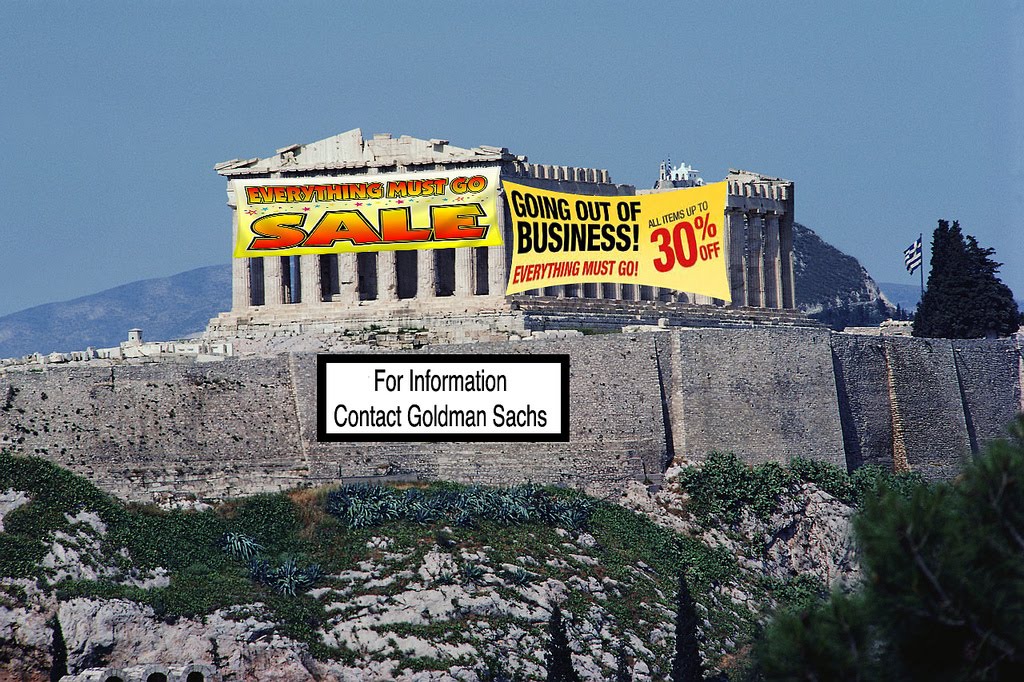
Of course some usual European fudge will be cobbled together at the last minute, the Acropolis might open in July under new German management, but nothing is going to fix Club Bad’s insolvency problem, except a restructuring and better yet, exiting the ridiculous one German size fits all, D. Mark Euro. Up first Greece (again) followed by a suddenly weak worrisome UK. Stay long physical precious metals. Fiat currency got the world into our current mess, and creating endless more fiat currency and debt is not going to get us out of it. Sooner or later a fiat currency revulsion is coming.

"We are not discussing the exit of Greece from the euro area. This is a stupid idea and an avenue we would never take."

Jean-Claude Juncker. Luxembourg Prime Minister and president of the Euro Group of Finance Ministers.

Greece deeper into junk territory as Moody's cuts again

Greece suffered another humiliating blow on Wednesday night when credit rating agency Moody's downgraded its rating on Greek bonds even further into junk status.

By Rupert Neate, and Louise Armitstead 6:17AM BST 02 Jun 2011

The downgrade places Greece at the very bottom of Moody's league table of credit-worthy European countries.

The news came as officials were desperately trying to secure an second emergency cash injection from the European Union and the International Monetary Fund.

Moody's said it was very concerned about Greece's "highly uncertain growth prospects" and warned that the embattled country is "increasingly likely to fail to stabilise its debt ratios" by the deadline set by its previous €110bn (£96.7bn) bailout.

The three-notch-downgrade takes Greece from B1 to Caa1, giving the country a worse credit rating than Montenegro.

The humbling downgrade came as German ministers were forced to reassure the market that the EU and the IMF were committed to the bailout. Martin Kotthaus, a German finance minister, said: "It was designed jointly. It will be evaluated jointly, and I also assume that it can only be continued jointly, including when it comes to the question of payouts of future tranches."

More

http://www.telegraph.co.uk/finance/economics/gilts/8551586/Greece-deeper-into-junk-territory-as-Moodys-cuts-again.html

"When it becomes serious, you have to lie"

Jean-Claude Juncker. Luxembourg Prime Minister and president of the Euro Group of Finance Ministers. Confessed liar.

JUNE 2, 2011

Europe Races to Widen Aid for Greece

Finance Officials Work on New Package To Ease Nation's Looming Cash Crunch

European finance officials met late Wednesday in Vienna to prepare a fresh aid package for Greece, people close to the matter said, but the talks must first bridge a crucial gap between Germany and the European Central Bank over whether private investors should share the pain of propping up the indebted nation.

Plucked from the brink of default in May 2010 by other euro-zone countries and the International Monetary Fund, Greece is again verging on a critical cash shortage.

Officials have conceded that Greece—already the beneficiary of €110 billion ($158 billion) in promised rescue aid—will need roughly another €30 billion in each of 2012 and 2013.

They are racing to figure out a plan before a key meeting of finance ministers later this month.

At least some of the money will have to come by way of a further bailout from taxpayers in Europe's stronger countries—chief among them Germany. But at the Vienna meeting on Wednesday, officials from the German finance ministry pressed for Greece's bondholders to bear some of the burden by accepting late repayment of their investments, said a person familiar with the matter. That "reprofiling" of Greek bonds is anathema to the ECB.

----But many private analysts say the euro zone's squabble over what to do now misses a broader point: Greece, they say, is highly unlikely to ever pay all its debts back—no matter if they are delayed for a few years or not.

"A debt reprofiling is not enough," said Rodrigo Olivares-Caminal, a senior lecturer in financial law at the University of London and a visiting professor at a Greek business school. "That was an option in 2009, early 2010, but not in 2011."

More.

http://online.wsj.com/article/SB10001424052702304563104576359510587233034.html?mod=WSJ_World_LEFTSecondNews

"For more than two thousand years gold's natural qualities made it man's universal medium of exchange. In contrast to political money, gold is honest money that survived the ages and will live on long after the political fiats of today have gone the way of all paper."

Hans F. Sennholz

Weak factory and mortgage figures stoke recovery fears

Hopes for an economic revival suffered a sharp setback yesterday as activity in the vital manufacturing industry slumped to levels last seen during the recession, mortgage approvals crashed to a record low for April, global growth indicators stumbled, and Britain was officially declared one the gloomiest nations in the world.

By Philip Aldrick and Emma Rowley 6:00AM BST 02 Jun 2011

The raft of poor news sent the pound tumbling against the dollar, closing almost two-thirds of a cent lower at $1.6401, as markets and economists decided the country is too weak to stomach a rate rise until early next year.

Analysts at Morgan Stanley added to the gloom negative sentiment by predicting that house prices will fall a further 10pc by the end of 2012. According to the Halifax, house prices have already crashed 20pc from their 2007 peak.

Angela Eagle, shadow chief secretary to the Treasury, said the "disappointing set of figures is further evidence that last year's economic recovery is stalling. Even the manufacturing sector now seems to have joined consumers in entering a more difficult phase."

The Government has pinned its hopes for recovery on a resurgent manufacturing industry, driven by rising exports. However, the closely-watched purchasing managers' index (PMI), compiled by the Chartered Institute of Purchasing & Supply and Markit, showed that activity has fallen to a 20-month low.

----More worrying was evidence output and new orders contracted last month for the first time in two years. Samuel Tombs, UK economist at Capital Economics, said output and new orders, at 49.9 and 48.3 respectively, suggested that "a sharp underlying slowdown in demand is taking place".

Correspondingly weak manufacturing data from the US, China and the euro area also published yesterday raised fresh fears that global growth is stalling.

More.

http://www.telegraph.co.uk/finance/economics/8551116/Weak-factory-and-mortgage-figures-stoke-recovery-fears.html

Next, is RBS turning into “the next Lehman? At least two knowledgeable M.P.s fear it might be.

A large Bank is exactly the place where a vain and shallow person in authority, if he be a man of gravity and method, as such men often are, may do infinite evil in no long time, and before he is detected. If he is lucky enough to begin at a time of expansion in trade, he is nearly sure not to be found out till the time of contraction has arrived, and then very large figures will be required to reckon the evil he has done.

Walter Bagehot. Lombard Street. 1873.

Royal Bank of Scotland told by MPs to explain £25bn accounting 'distortion'

Two Members of Parliament have written to the Royal Bank of Scotland to demand an explanation of the bank's accounting methods which they claim may be distorting its capital position by as much as £25bn.

By Louise Armitstead 5:45AM BST 02 Jun 2011

David Davis, the former Tory front bencher, and Steve Baker, the MP for Wycombe, have called for RBS to prove that its accounts are not being distorted by the controversial International Financial Reporting Standards (IFRS).

The letter, seen by The Daily Telegraph, details a disagreement between the MPs and RBS at a private meeting on May 24. The MPs argued that IFRS, which has been described as a "fatally flawed" system, is inflating the profits and capital position of RBS and other banks.

The MPs pointed to the fact that while RBS's accounts stated that the bank had £32bn in losses, the Government's Asset Protection scheme accounts show an expected loss of £57bn from its toxic assets alone.

Written by Gordon Kerr, a banking expert, the letter claims that the distortion in the accounts could be equivalent to as much as 50pc of RBS's core tier one capital. It says: "That means on a prudent basis RBS has a basic capital ratio (leverage on total assets) of 2.75pc rather than 5.5pc as stated."

The MPs claim that the rules are at fault but also that RBS has applied them more extensively than other European banks. Mr Baker is behind a Private Members Bill intended to make banks file accounts using the old UK GAAP standards, as well as IFRS, to force them to account for poor loans as well as failed ones.

At the meeting, RBS's representatives disagreed with the MPs' assessment. Last night the bank said: "RBS is fully compliant with IFRS accounting standards."

The dispute comes ahead of the Government's response to a report by the House of Lord's Economic Affair's Committee which was highly critical of the IFRS system.

http://www.telegraph.co.uk/finance/newsbysector/banksandfinance/8551272/Royal-Bank-of-Scotland-told-by-MPs-to-explain-25bn-accounting-distortion.html

In other significant news yesterday, the great Eur-Asian drought continues. On both the western and eastern edge of the giant land mass, the great 2011 drought grinds on. Without a break in the drought soon, a foodstuff disaster will ensue.

JUNE 2, 2011

Record Heat Costs France

PARIS—France's record drought is threatening electricity supplies, as low water levels reduce hydroelectric power and make it hard to cool nuclear plants, widening the potential impact of the hottest, driest spring in memory.

The warning came as neighboring Germany, from which France often buys electricity, shutters some of its nuclear capacity, effectively eliminating its reserve capacity.

----Europe is facing growing economic threats from this year's extreme weather. France has had the hottest spring in memory, according to its weather agency, with average temperatures in March-May 2.6 Celsius above the average between 1971 and 2000; and rainfall just 45% of the average over that period.

Water restrictions—on use for car washing and plant watering —have been imposed in about half the country. The parched soil is already certain to hit France's wheat harvest, Western Europe's largest, something the government says will push up world prices.

Nuclear plants, which provide some 80% of France's electricity, need plenty of water to cool the reactors. If river flows are decreasing and levels get too low, "it will make it harder to pump water out of the rivers and cool the systems." said a spokeswoman for Electricite de France SA, the world's largest producer of nuclear energy.

Another potential problem is a higher-than-normal water temperatures. A combination of warm water in insufficient quantities could mean taking the plants offline or lowering their production, she said.

But this year, there are problems with the usual ways of compensating for such reductions in nuclear-power production. Hydroelectric power was down in the first quarter, which is extremely rare, due to the lack of snow and precipitations, the EDF spokeswoman noted.

France normally imports power from Germany during summer, as it conducts maintenance work on some of its nuclear plants. But Germany reduced its electricity output by 5% in March following the crisis at Fukushima Daiichi nuclear power plant in Japan. Germany's Federal Network Agency—the electricity grid regulator—has warned that permanently shutting down nuclear plants will eliminate the country's reserve capacity, endangering summer power exports to France.

----In the first stage of Germany's nuclear phase-out, it has closed eight of its 17 reactors, something that could cost its government about €1 billion in tax revenues a year, finance ministry spokesman Martin Kotthaus said Wednesday. The government introduced a tax on nuclear-fuel rods earlier this year.

http://online.wsj.com/article/SB10001424052702303745304576359751889677160.html?mod=WSJEurope_hpp_MIDDLETopStories

China's largest inland lake dries up as country battles drought

China's largest inland lake has disappeared in worst drought to hit the centre and east of the country for more than half a century.

By Malcolm Moore, Shanghai 9:36PM BST 30 May 2011

The volume of water in Poyang lake in Jiangxi province, normally 100 miles-long and 10 miles-wide, is now a tenth of its normal level, according to Xinhua, the Chinese state news agency.

Fishing boats and house boats have been left stranded on a vast stretch of the lake bed, now a lush grassland.

The drought, which has seen no rainfall for two months, has struck the central Chinese provinces that are known as the country's "home of rice and fish".

Almost half of all the country's rice fields have been affected and four million people do not have access to drinking water.

At Honghu Lake, in Hubei province, fish farmers have seen 80 per cent of their stocks die. "More than 20,000 acres of fish farms have been severely damaged," said Zou Haibin, the local Communist party secretary in Dianhe, to Xinhua.

----The drought has pushed up vegetable prices in major cities by as much as 30 per cent, and the government has warned that if it continues it may have an effect on this year's rice harvest.

However, the Chinese weather bureau has warned there is no rain in sight and that it expects the drought to continue until early June.

http://www.telegraph.co.uk/news/worldnews/asia/china/8546673/Chinas-largest-inland-lake-dries-up-as-country-battles-drought.html

"The first requisite of a sound monetary system is that it put the least possible power over the quantity or quality of money in the hands of the politicians."

Henry Hazlitt

At the Comex silver depositories Wednesday, final figures were: Registered 29.63 Moz, Eligible 71.82 Moz, Total 101.45 Moz. Deliverable silver has now fallen below 30% of the available Comex silver. Happenstance or something more in play?

+++++

Crooks and Scoundrels Corner.

The bent, the seriously bent, and the totally doubled over.

No crooks today, just a German example of what happens when vote seeking governments make sudden U-turns pandering to media pressure. How not to make decisions in public office. One day Germany’s power producers had a settled plan to generate nuclear power out to 2035, the next day all closed nuclear plants were permanently closed, with all the others forced to close by 2022. Arbitrary and capricious spring to mind. Disastrous in a nation noted for sticking rigidly to the master plan, whatever it might be, and not noted for flexible improvising in the field. With the new Dalton Minimum in sunspots well into play, and with it a probable period of global cooling lasting out to 2025-2030, see the full sunspot section on the blog, will Germany be able to fill the gap in its much needed electric power?

"The most puzzling development in politics during the last decade is the apparent determination of Western European leaders to re-create the Soviet Union in Western Europe."

Mikhail Gorbachev

Nuclear Phaseout Could Spell Disaster for German Energy Giants

06/01/2011

----The Japanese nuclear disaster at Fukushima and the subsequent debate about nuclear safety have plunged Germany's energy industry -- in particular the country's four biggest utilities, RWE, E.on, EnBW and Vattenfall -- into a hitherto unimaginable crisis.

Profits now look set to plummet. According to internal company estimates, after-tax earnings could fall by up to 30 percent this year alone. That's partly because customers are fleeing in droves to the big four's environmentally friendly rivals, such as Lichtblick and Naturstrom, companies that offer electricity free of nuclear or coal sources. The share prices of electricity companies have been on the decline for months. As a result, the stock exchange darlings of yesterday may now be the takeover candidates of tomorrow.

As if to add insult to injury, the German government this week announced it would permanently reverse its plans to extend the lifespans of nuclear power plants in the country. A post-Fukushima "moratorium" had already taken the seven oldest of Germany's 17 nuclear power plants off the grid. They will now stay permanently offline, as will another plant that was already out of operation following an accident in 2009. Under the plan agreed by Merkel's Christian Democrats (CDU) and the business-friendly Free Democrats (FDP) on Sunday, Germany's remaining nuclear plants will also be shut down between 2021 and 2022.

The government has handed a small olive branch to nuclear energy producers by allowing them to transfer their allotted energy production from the plants that are currently offline to newer ones that will continue to operate until 2022. But the utilities had also hoped that the government would scrap the nuclear fuel tax it had introduced as part of an austerity package passed last year. The tax is intended to generate around €2.3 billion a year through 2016 for the government to help pay off its public debt. With the current closure of the eight plants, that sum is already expected to drop to around €1.3 billion annually, but it is a sum the Finance Ministry has refused to do without.

-----Berlin's nuclear exit strategy spells doom for the utilities. Atomic energy expert Wolfgang Pfaffenberger from Jacobs University in Bremen estimates that the eight plants that are being shut down this year generate annual profits of over €1.5 billion and revenues of at least €3 billion. All of Germany's 17 nuclear plants together generate around €4 billion in profits and €7.5 billion in turnover -- all revenues that will disappear by 2022 at the latest.

In addition, nuclear energy produces few carbon emissions. With an increasing reliance on fossil fuel sources until renewable energy sources can be expanded, the number of certificates the companies are required to purchase for the right to emit CO2 could rise dramatically. Today the companies obtain approximately 70 percent of those certificates for free. Energy researcher Uwe Leprich at the University of Applied Sciences in Saarbrücken, Germany, has calculated that the German coal industry will have to pay around €4.2 billion a year starting in 2013 for emissions certificates. A large part of that will be borne by the four main energy companies.

----As the uncertainty over their future persists, RWE and E.on are becoming increasingly nervous. After all, much more is at stake than possibly losing billions in revenues from nuclear power. Their main worry is whether their very business model, which is based on generating electricity centrally at huge power plants, is viable in the long term -- or if it will ultimately lead to their demise.

Pushed into a corner, they are taking action against the government, too. On Tuesday, the board of E.on announced it would sue Berlin over the government's decision to keep the nuclear fuel tax. "Adhering to the tax while at the same time significantly shortening the operating lives of nuclear power stations raises additional legal issues," the company said in a statement. E.on said it "expects to receive due compensation for the financial damages associated with these decisions, which is expected to amount to billions of euros."

More

http://www.spiegel.de/international/business/0,1518,766095,00.html#ref=nlint

"Gold is as steady as a rock, a standard bearer by which all currencies can be accurately measured."

Mark Skousen

The monthly Coppock Indicators finished May:

DJIA: +196 Up. NASDAQ: +249 Up. SP500: +200 Up.

The Dow and SP 500 and NASDAQ have all reversed from down to up. The Fed’s rigging of the indicators seems to have worked. Note: like all indicators, they were devised for normal markets not markets where the central bank is flooding the economy with new cash. In current conditions where risk is suspended by too big to fail, I doubt any indicators are showing more that where the Fed’s new cash is flowing in our world of casino capitalism. But the Fed’s QE program is supposed to end this month!!!

Wednesday, 1 June 2011

Yet Another Red Flag.


Baltic Dry Index. 1480 +06


LIR Gold Target by 2019: $30,000. Revised due to QE programs.


Though Mr. Tourre was a more junior member of the Goldman team, the S.E.C. case against him was bolstered by colorful e-mails he wrote, calling mortgage securities like those he created monstrosities and joking that he sold them to “widows and orphans.”


Once upon a time in a happy, mythical land called Europe…. But first this. It was the last day of the month, and yet another Fed inspired dress up the stock market ending. And they all lived happily ever after. If only generating real prosperity was so easy. While the central banksters are busy creating ever more Potemkin villages, behind the false façade reality is getting uglier by the day. Up first China starts to wobble. Stay long physical gold and silver, the house of cards called fiat money gets shakier by the day.


"In the long run, the gold price has to go up in relation to paper money. There is no other way”.


Nicholas L. Deak


May 31, 2011, 11:59 p.m. EDT


China manufacturing growth slows further


HONG KONG (MarketWatch) — China’s manufacturing activity expanded in May at its weakest pace in three quarters, as the economy faced headwinds of high inflation and government efforts to rein in prices, according to rival surveys of companies released Wednesday.


The official China Federation of Logistics & Purchasing Managers’ Index eased to 52.0 from 52.9 in April, marking the slowest pace of growth in nine months.


The result was below the median forecast of 52.2 in a Reuters survey of economists.


Meanwhile, a separate PMI published by HSBC and compiled by U.K. group Markit, showed headline activity at 51.6, easing from 51.8 in April, the slowest pace of growth in 10 months.


Analysts at Credit Suisse said that the Federation’s PMI showed new orders declining at a faster pace than the slowdown in the overall reading, a sign that manufacturing activity may have already peaked in the current economic cycle.


http://www.marketwatch.com/story/china-manufacturing-growth-slows-further-2011-05-31


Next, move over Spain, Portugal, Ireland and Greece, make way for the A team in serial tax deferment. Step up Berlusconi’s bunga bunga land of Club Mad fantasy. From London, you have to ask yourself do you really want to join a club that lets in Silvio Berlusconi? Unfortunately we already did. Not yet forced to be a member of the disintegrating European Monetary Union, from London it looks like yet another bailout job for the hardworking taxpaying Germans. From London it doesn’t get much better than this. Stay long gold and silver, for that inevitable moment all the German cash runs out, and they wise up being played the patsy of Europe. Italy adopting painful budget policies, this must have them rolling in aisles in the Vatican.


"The history of paper money is an account of abuse, mismanagement, and financial disaster."


Richard M. Ebeling


MAY 31, 2011, 11:08 P.M. ET


Draghi Warns Italy to Trim Public Spending


ROME—Mario Draghi, on his way out of Italy to take the helm of the European Central Bank, urged his nation's government to adopt painful budget policies to boost growth and comply with the euro zone's fiscal rules.


Italy will have to cut public spending by 5% by 2014, and can't afford to raise taxes or reduce investments, said Mr. Draghi, governor of the Bank of Italy, in a speech before the elite of Italian business and finance in Rome.


At the same time, he warned, continuing current fiscal austerity with uniform, across-the-board spending cuts would knock Italy's economic growth back by two percentage points in the next three years, he said.


Italy needs to "return to growth," Mr. Draghi said, reiterating a common theme of his six-year stint at the country's central bank.


Tight fiscal policy since the global financial crisis began has muted the Italian recovery, but also has allowed the country to keep investors interested in its government bonds, despite government debt at 120% of gross domestic product, the euro zone's second-highest level after Greece. However, on May 20 Standard & Poor's said it had cut its outlook on Italy's sovereign debt to negative, warning of downside risks to the country's already modest growth potential.


Now Mr. Draghi, in his new role at the helm of the ECB, will be a key player, with other European governments, in trying to curb the Continent's continuing debt crisis. His comments Tuesday are one of the last chances he will have to give his recipe specifically for Italy.


More.


http://online.wsj.com/article/SB10001424052702303657404576357340579158746.html?mod=WSJEUROPE_hpp_MIDDLETopNews


Today a wakeup call to another of the dangers of modern life. Alongside fast food, convenience food, and an over indulgence in alcoholic drink, our addiction to the convenience of mobile phone technology may be very detrimental to our health. I am a dinosaur when it comes to mobile phone technology. Mine is mostly turned off, used for emergencies or when I actually need to make a call. I feel no need to be constantly available to every Tom, Dick or Harry, let alone my family. Unlike CIA though, I do not disconnect the battery so as to be untraceable to the police and other lawful authorities. On second thoughts nor did they as their Italian job team found out as they partied their way around Italy’s 5 start hotels. Should I suddenly turn into an ax murderer, the police will know exactly where I was when I murdered that ax.


Mobile phones 'possibly carcinogenic' say World Health Organisation experts


Mobile phones may increase the risk of developing brain cancer, an influential health organisation has said admitted for the first time.


7:00PM BST 30 May 2011


The International Agency for Research on Cancer, part of the World Health Organisation, has classified the radiation emitted by handsets as “possibly carcinogenic” although it did not find evidence of a clear link.


Its decision - putting mobiles in the same risk category as lead, the pesticide DDT and petrol exhausts - will put governments under pressure to update their advice to the public on the potential dangers of talking on mobiles for long periods of time.


Christopher Wild, the director of IARC, said that while more research is carried out “it is important to take pragmatic measures to reduce exposure such as hands-free devices or texting”.


It has long been known that the radiofrequency electromagnetic fields emitted by mobile phones are absorbed by the body, much of it by the head when the handset is held to the ear.


But research into the possible health consequences of frequent mobile use has proved inconclusive because the technology has only been widely used for a few years while it can take decades for tumours to develop.


Last year a landmark IARC study, known as Interphone, disclosed that making calls for more than half an hour a day over 10 years could increase users’ risk of developing gliomas - a type of tumor that starts in the brain or spine - by 40 per cent.


Over the past eight days, a working group of 31 scientists from 14 countries reviewed the Interphone data and other studies, including a Swedish report that also found evidence of increased brain tumour risk among mobile users.


They concluded that there was “limited” evidence that wireless phones are linked to brain cancer – meaning that it could be down to chance rather than causation – and “inadequate” proof that mobiles cause other types of cancer.


Dr Jonathan Samet, chairman of the group, admitted the evidence is “still accumulating” but insisted: “The conclusion means that there could be some risk, and therefore we need to keep a close watch for a link between cell phones and cancer risk”.


By classifying mobiles as “possibly carcinogenic”, the IARC has placed them alongside DDT, chloroform, coffee, lead and working as a firefighter in a list of more than 900 agents it has analysed. However this is only the third-highest rating, below “carcinogenic to humans”, which includes cigarettes, and “probably carcinogenic”, which includes diesel exhausts and creosote.


http://www.telegraph.co.uk/health/healthnews/8548725/Mobile-phones-possibly-carcinogenic-say-World-Health-Organisation-experts.html


Oh, what times! Oh, what standards!


Cicero


At the Comex silver depositories Tuesday, final figures were: Registered 31.10 Moz, Eligible 70.61 Moz, Total 101.71 Moz.


+++++


Crooks and Scoundrels Corner.


The bent, the seriously bent, and the totally doubled over.


Goldie again, what else! Once upon a time, in the land of the free sacked by Goldie….. How a 28 year old fiendish French devil got into “God’s work” on Broad Street. How the Frenchie “fabulous Fab” fooled everyone including Ebenezer Squid, and single handedly nearly wiped out the western financial system. Aesop’s fables updated 21st century style. I wonder if “the Fab” knows DSK? More importantly, who is leaking this stuff to the NY Times and why? Is someone in Goldie cutting a deal? Who’s wired up and who’s being set up? Ebenezer Squid? What else can be found in dumpsters in lower Manhattan? Once upon a time in the land of the free, lived a clan of great vampire squids busy doing God’s work for billions a year…..


“I believe there is something out there watching us. Unfortunately, it's the government.”


Woody Allen.


S.E.C. Case Stands Out Because It Stands Alone


By LOUISE STORY and GRETCHEN MORGENSON Published: May 31, 2011


At the height of the housing boom, the 26th floor of Goldman Sachs’s former headquarters on Broad Street in Lower Manhattan was the nerve center of Goldman’s fast-growing mortgage trading business.


Hundreds of employees worked closely in teams, devising mortgage-based securities — billions of dollars’ worth — that were examined by lawyers, approved by management, then sold to investors like hedge funds, commercial banks and insurance companies.


At one trading desk sat Fabrice Tourre, a midlevel 28-year-old Frenchman who was little known not just outside Goldman but even inside the firm. That changed three years later, in 2010, when he achieved the dubious distinction of becoming the only individual at Goldman and across Wall Street sued by the Securities and Exchange Commission for helping to sell a mortgage-securities investment, in one of the hundreds of mortgage deals created during the bubble years.


How Mr. Tourre alone came to be the face of mortgage-securities fraud has raised questions among former prosecutors and Congressional officials about how aggressive and thorough the government’s investigations have been into Wall Street’s role in the mortgage crisis.


Across the industry, “it’s impossible that only one person was involved with fraudulent activities in connection to the sales of these mortgage securities,” said G. Oliver Koppell, a New York attorney general in the 1990s and now a New York City councilman.


In the fall of 2009, when Mr. Tourre learned that he had become a target of investigators for helping to sell a mortgage security called Abacus, he protested that he had not acted alone.


That fall, his lawyers drafted private responses to the S.E.C., maintaining that Mr. Tourre was part of a “collaborative effort” at Goldman, according to documents obtained by The New York Times. The lawyer added that the commission’s view of his role “would have Mr. Tourre engaged in a grand deception of practically everyone” involved in the mortgage deal.


Indeed, numerous other colleagues also worked on that mortgage security. And that deal was just one of nearly two dozen similar deals totaling $10.9 billion that Goldman devised from 2004 to 2007 — which in turn were similar to more than $100 billion of such securities deals created by other Wall Street firms during that period.


While Goldman paid $550 million last year to settle accusations that it had misled investors who bought the Abacus mortgage security, no other individuals at the bank have been named. Now, however, as criticism has grown about the lack of cases brought by regulators, the scope of the inquiries appears to be widening. The United States attorney general, Eric H. Holder Jr., has said publicly that his lawyers were reviewing possible charges against other Goldman officials in the wake of a Senate investigation that produced reams of documents detailing other questionable decisions that were made in the firm’s mortgage unit.


More.


http://www.nytimes.com/2011/06/01/business/01prosecute.html?_r=1&hp


“Overheard at Goldman Sachs”:
“We assume that you know what you’re doing,
In this ill-advised trade you’re pursuing,
But the opposite bet
That we place on your debt
May eventually hasten your ruin.”


http://blogs.wsj.com/economics/2010/03/17/celebrate-st-patricks-day-with-some-economic-limericks/?utm_source=feedburner&utm_medium=feed&utm_campaign=Feed%3A+wsj%2Feconomics%2Ffeed+%28WSJ.com%3A+Real+Time+Economics+Blog%29


The monthly Coppock Indicators finished May:


DJIA: +196 Up. NASDAQ: +249 Up. SP500: +200 Up.


The Dow and SP 500 and NASDAQ have all reversed from down to up. The Fed’s rigging of the indicators seems to have worked. Note: like all indicators, they were devised for normal markets not markets where the central bank is flooding the economy with new cash. In current conditions where risk is suspended by too big to fail, I doubt any indicators are showing more that where the Fed’s new cash is flowing in our world of casino capitalism. But the Fed’s QE program is supposed to end this month!!!